
The Bluebird Inside Charles Bukowski: The Vulnerability Behind the Tough Exterior
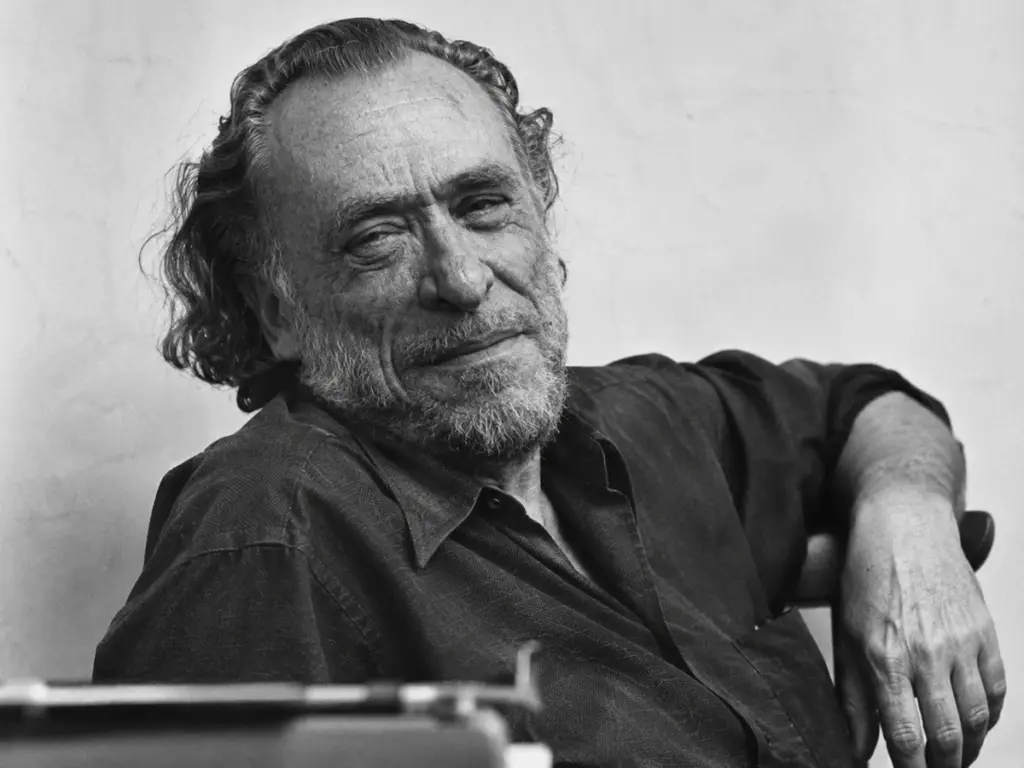
You probably know someone who can’t take a compliment. Say something kind and they crack a joke. Ask how they’re really doing and they’re suddenly very interested in their phone. Maybe that person is you.
We tend to file people like this under “tough” or “private” and leave it there. Charles Bukowski, the poet of racetracks, cheap rooms and morning-after regret, left a better explanation. In his poem Bluebird, he admits to keeping something small and soft locked inside his chest. For a writer who spent decades sneering at sentiment, it’s an odd confession. It’s also one of the most honest things he ever wrote.
This article looks at the meaning of Charles Bukowski’s Bluebird, and at why so many of us hide the very parts of ourselves we most want someone to find.
Who Was Charles Bukowski? The Man Everyone Thought They Knew
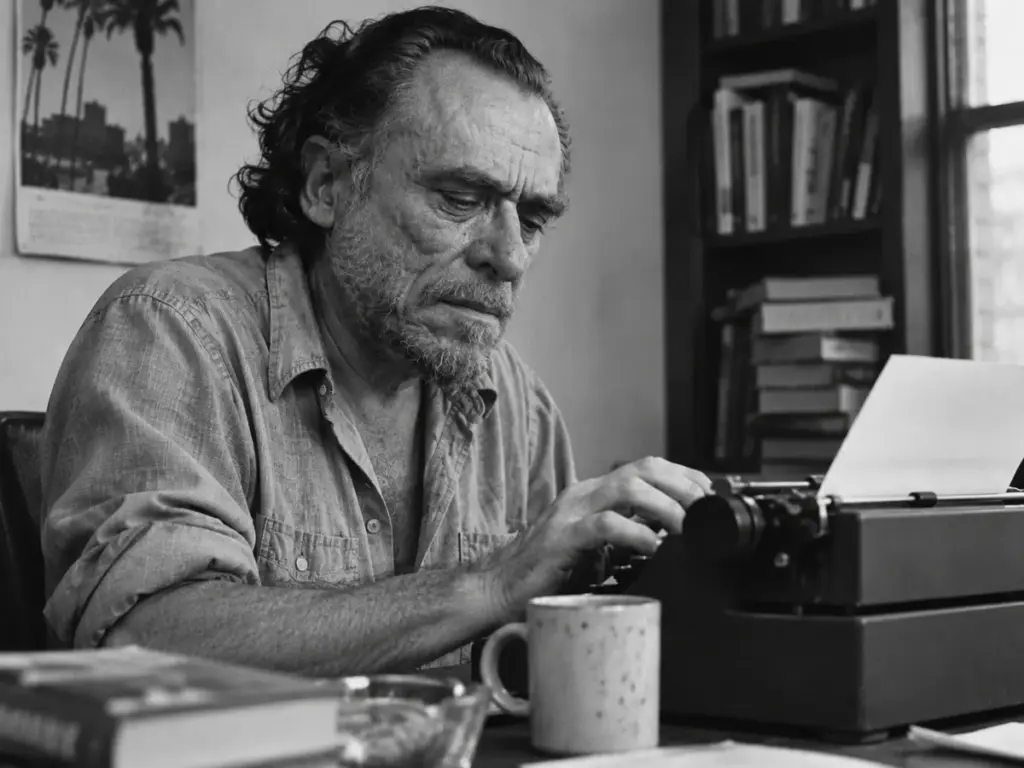
Bukowski made his name writing about the stuff respectable literature skipped. He wrote about the post office job he hated for more than a decade, about bars and horse races, about women who left and rent that came due. The sentences were short and flat, and that was the point.
The persona fit the work. He was the drunk who insulted interviewers, the guy who seemed to enjoy being disliked. Readers loved him for it. Plenty of critics couldn’t stand him.
The childhood behind that persona was rough. He was born in Andernach, Germany, in 1920, and his family moved to Los Angeles when he was a toddler. His father beat him, often over trivial things. As a teenager he developed acne so severe it scarred his face and kept him out of school for a time. He wrote about all of it decades later in Ham on Rye (1982), probably the closest thing he produced to a memoir.
A hard childhood doesn’t explain a whole person. Still, it’s easy to picture a kid figuring out that being noticed usually meant getting hurt. Keep that kid in mind when you read Bluebird.
Bluebird Poem Meaning: The Little Bird in His Heart

Bluebird was published in The Last Night of the Earth Poems in 1992, two years before Bukowski died. It’s a short poem, and it reads almost like someone talking to you across a bar.
The speaker tells us there’s a bluebird in his heart that wants out. He won’t allow it. He says he’s too tough. So he drowns it in whiskey and smothers it with cigarette smoke, and the people around him, from bartenders to grocery clerks to the women he sleeps with, have no idea it’s there.
Then the poem turns. Late at night, when everyone’s asleep, he lets the bird out for a little while. He talks to it. He lets it know he knows it’s there. Then he puts it back. The poem closes with him insisting he doesn’t cry, which, coming right after that confession, isn’t very convincing.
Plenty of poets have written about a hidden soft side. What sets this one apart is the caretaking. He knows the bird is real, he keeps it alive on purpose, and he’s still determined that nobody will ever see it.
So why hide something so harmless? Why can he be tender alone at 3 a.m. and not in front of one other person? The poem doesn’t say. It just leaves him sitting there with the bird.
One caution: a poem’s speaker isn’t automatically the poet. Bukowski, though, spent his whole career blurring that line, and most readers take Bluebird as a self-portrait. It’s hard to argue they’re wrong.
The Psychology of Emotional Armor

You don’t have to like Bukowski to recognize the bluebird. Most people have one. Most people also have some kind of armor around it, and that armor rarely looks like fear. It looks like personality.
A few common versions:
- Cynicism. If you mock sincerity first, nobody gets the chance to mock yours.
- Indifference. “Whatever, it doesn’t matter” is a lot easier to say than “this matters to me more than I want to admit.”
- Humor. The funniest person in the group is sometimes the one nobody thinks to check on.
- Fierce independence. Not needing anyone is useful right up until someone offers help and you can’t bring yourself to take it.
- Anger. For a lot of people, anger is the one emotion that feels safe to show. Hurt and fear stay underneath.
None of these is a diagnosis. Some cynics are just cynical. But if you’ve ever said “I’m fine” in a voice that wasn’t fine, you already know how this works.
Why Men Hide Their Emotions (and Why It’s Not Only Men)
The speaker in Bluebird isn’t only hiding a feeling. He’s guarding a reputation.
Lots of boys get the message early. Crying gets you mocked. Anger is acceptable, sadness isn’t. By adulthood, plenty of men can tell you exactly what annoyed them today and have no words at all for what hurt. Asking a friend for emotional support feels like losing something. Looking unaffected becomes a point of pride.
Women deal with their own versions of this. Think of the friend everyone leans on, the oldest sibling, the manager who’s always “got it handled.” When your role is to be the strong one, letting anyone see the bird can feel like quitting the job.
It helps to separate two things that look alike from the outside. Being emotionally strong means you can feel something heavy and still function. Being emotionally inaccessible means you make sure no one ever knows you felt it. The first is resilience. The second is loneliness with good posture.
When Cynicism Becomes a Defense Mechanism
One way to read Bukowski, and maybe a few people in your own life, is to ask what the outer layer is protecting.
| What the world sees | What might be underneath |
|---|---|
| Indifference | Fear of disappointment |
| Cynicism | Disillusionment |
| Aggression | Frustration with nowhere to go |
| Independence | Difficulty trusting others |
| Humor | Sadness nobody hears about |
| Toughness | Sensitivity |
These are possibilities, not rules. What they suggest is that people often build an identity around the exact thing they don’t want found. Give it enough years and the tough-guy act stops being an act.
That’s the most unsettling idea buried in Bluebird. What happens when you wear the mask long enough to forget it’s a mask?
Someone who hasn’t cried in fifteen years may find they can’t, even when they want to, even when the person across from them would gladly sit through it. The armor that was supposed to keep the world out ends up locking them in.
The Contradictions That Make Us Human
Bukowski is an extreme example. The contradiction he describes isn’t extreme at all.
We want company and we protect our alone time. We want to be understood and we’re bad at explaining ourselves. We want to be loved, and being loved means being seen, which is the scary part.
That isn’t necessarily something to fix. It’s what having more than one need at a time looks like. You can be tough and sensitive. You can be independent and lonely on the same Tuesday afternoon.
It’s also worth being straight about Bukowski himself. He could be cruel. His drinking hurt the people closest to him, and critics have long taken issue with how he wrote about women. One gentle poem doesn’t wash any of that away. It does make him harder to reduce to a cartoon, which is true of most people once you look closely.
Learning to Let the Bluebird Out

The easy ending here would be a pep talk about opening up. The poem doesn’t really support that.
You don’t owe your inner life to everyone. Keeping some feelings private is normal, and vulnerability doesn’t require dropping every boundary you have. Letting one trusted person in isn’t weakness, and it won’t cost you your independence.
What’s genuinely sad about the man in Bluebird isn’t that he keeps the bird to himself. It’s that he seems ashamed of it. He pours whiskey on it. He only lets it breathe when the whole city’s asleep.
Most of us have a bluebird somewhere. The harder question is whether we can stop treating it like something to be embarrassed about.
Maybe strength was never about hiding every weakness. Maybe it’s reaching the point where you don’t have to hide every feeling.
Frequently Asked Questions
What is Charles Bukowski’s poem Bluebird about?
Bluebird is about a man who hides a tender, vulnerable side of himself behind a tough exterior. The bluebird in his heart stands for that sensitivity. He suppresses it in public with alcohol, cigarettes and attitude, and only lets it out privately at night.
When was Bluebird by Charles Bukowski published?
It appeared in The Last Night of the Earth Poems, published by Black Sparrow Press in 1992.
What does the bluebird symbolize in the poem?
The bluebird represents emotional vulnerability: tenderness, sadness and a need for connection the speaker feels he can’t show. Many readers see it as Bukowski admitting that his hard-living persona protected something softer.
Is Bluebird autobiographical?
Not explicitly, since a poem’s speaker isn’t automatically the poet. But Bukowski drew heavily on his own life, and most readers and critics treat the poem as a self-portrait.